
4 Best Compression Socks for Swelling on Long-Haul Flights in 2026
If you’ve ever experienced swollen legs after a long flight, you know it’s not just uncomfortable but can also be risky. In 2026, the best compression socks blend medical-grade support (15-30 mmHg) with comfort and style—many tested for breathability, moisture-wicking, and durability. Whether you prefer easy-to-wear zippers or sleek graded compression, the right pair can make a significant difference. Curious about which options suit your needs? Let’s explore the top contenders for your next journey.
CharMking Compression Socks for Men & Women (3 Pairs)

- COMPRESSION SOCKS - We intend combining fashion, technology and science to bring you the triple comfort without. The material of our compression...
- COMFORT - We carefully designed and manufactured our compression socks to provide premium support, comfort, and relief without compromising your...
- EFFECTIVE - Our compression socks (15-20 mmHg) are highly recommended by preferred by trainers. These are designed to promote blood circulation...

If you want socks that look good and work well, CharMking’s compression socks for men and women are a great choice. They are perfect if you sit a lot, take long flights, or stand on your feet for hours. The socks are made from 85% nylon and 15% spandex. This makes them soft, breathable, and stretchy. They are flexible and strong, so they last a long time.
The socks have a level of compression called 15-20 mmHg. This helps improve blood flow, reduce swelling, and help your muscles recover. They are lightweight, fit nicely, and stay comfortable even if you wear them all day. They come in two unisex sizes, so most people can find a good fit. They are a good choice for anyone wanting reliable leg support.
Best for: People who want stylish, breathable compression socks. They are good for long walks, traveling, or sports.
Pros:
- Give 15-20 mmHg compression to boost blood flow and lower tiredness
- Made from soft, breathable materials for all-day comfort
- Unisex sizes fit many feet, making them easy to wear
Cons:
- Can feel tight for people with very small or wide feet
- Limited color choices and designs compared to regular socks
- Need to measure your feet to get the right size for good support
These socks help keep your legs comfortable and healthy. They are simple to use and work well for daily use or travel.
Physix Gear Compression Socks 20-30 mmHg

- Experience Superior Comfort: Our calcetines de compresion provide unparalleled support for all-day wear; perfect as the best compression sock for...
- Unleash Your Full Potential: Whether for sports or work, these sock compression socks are designed to enhance your performance; a perfect choice...
- Stay Energized All Day: Our compression socks for women & men are crafted to boost circulation and reduce swelling; the best compression socks...
Physix Gear Compression Socks have a compression level of 20-30 mmHg. If you fly long distances, these socks can help stop your feet and legs from swelling. They also improve blood flow, so your legs feel less tired and heavy. The socks focus on the arches and heels, which often get tired first. They are made from strong, good-quality materials, so they last a long time. You can wear them every day or when you travel. They come in different sizes and styles, so you can find what fits you best. These socks look good and work well, giving you comfort and style in one package. They help keep your legs feeling fresh, so you don’t need to worry about jet lag or tired legs after a busy day.
Best for: travelers, athletes, or anyone who spends many hours on their feet. They want to improve circulation, cut down swelling, and stay comfortable.
Pros:
- Give firm, targeted compression of 20-30 mmHg. That helps blood move better and stops tiredness.
- Made from tough, high-quality materials. You can wear them often.
- Look good and stylish. You don’t have to choose between comfort and fashion.
Cons:
- Might feel tight or uncomfortable for people with very sensitive skin or small calves.
- Usually cost more than regular socks. That’s because they are designed for compression.
- You need to find the right size. Measuring your legs before buying helps make sure they work well.
NEENCA Zipper Compression Socks for Pain Relief

- 🎁 Best Gift Idea For Your Friends And Family! 🎁—NEENCA Professional Medical Compression Socks with Zipper Design: Easier to put on and...
- Professional Zipper Compression Socks For Better Blood Circulation, Pain Relief and Injuries Recovery. Medical Knee-high Graduated Stocking For...
- BETTER PERFORMANCE— Overcome the defects of similar products, medical compression zipper socks with no allergies and itchiness. Different from...
Neenca Zipper Compression Socks are a great choice if you want help with pain and swelling. They are good for long flights or when you’re active. These socks use graduated compression. This means they push blood from your legs back toward your heart. This helps reduce swelling and makes your legs feel better. They can help with injuries or everyday tiredness.
The socks are made from strong, breathable materials. They include nylon, polyester, and spandex. This makes them comfy and easy to wear. The zipper on the side is easy to use. It helps you put on and take off the socks quickly. This is helpful if you are in a rush or on a plane.
Many doctors approve these socks. They are used in hospitals. They give targeted support for foot and leg problems like plantar fasciitis. They combine comfort with professional therapy.
Who should use these socks? People who want relief from pain. People who want to boost circulation and reduce swelling. They are good for travel, sports, and everyday tasks. They are especially helpful for those recovering from injuries or managing foot problems.
Pros:
- They increase blood flow and reduce swelling.
- The zipper design makes them easy to put on and take off.
- Made from strong, breathable fabrics for all-day comfort.
Cons:
- You should check the size chart carefully to find the right fit.
- They might not be suitable for sensitive skin or allergies.
- The compression might feel tight if you are not used to it.
Neenca Zipper Compression Socks are simple to use. They help you feel better fast. Whether you are traveling, exercising, or just moving around, they can make a difference.
Travel Compression Socks for Women 15-20mmHg (Large)

- MADE IN USA (S–3XL) – Sizes Small through 3XL are proudly manufactured in the USA for trusted quality; larger sizes are imported but crafted...
- IMPROVED CIRCULATION – 15–20 mmHg graduated compression supports healthy blood flow during travel or long hours on your feet, helping...
- SHEER MATERIAL – Elegantly sheer fabric blends style and functionality, offering lightweight comfort while maintaining a polished look for...
Planning a long flight or a busy day on your feet? You need compression socks that are both supportive and stylish. These large-sized travel compression socks do just that. Made in the USA from nylon and spandex, they give a gentle push of 15-20mmHg. This helps improve blood flow and keeps your legs from getting tired.
The socks are lightweight and breathable. The sheer fabric makes them look nice and neat. They have a stay-up band that keeps them in place all day. You won’t have to stop and fix them every few minutes. They stay put, so you stay comfortable and confident during your travels.
These socks are great for women who want a blend of style and support. They are especially helpful when you are traveling long distances or standing for a long time.
Advantages:
- The graduated compression helps blood flow better and reduces leg tiredness.
- Made in the USA with good-quality materials for lasting wear.
- The sheer design and stay-up band help them look nice and stay put.
Drawbacks:
- Larger sizes are imported, so they might take longer to arrive.
- They may feel tight if you’re not used to compression socks or have sensitive skin.
- They usually come in neutral nude color, so options are limited for more colorful styles.
These socks give you the support you need, look good doing it, and stay comfortable all day long. They are a smart choice for anyone needing extra support during travel or long days on your feet.
Factors to Consider When Choosing Compression Socks for Swelling on Long Haul Flights
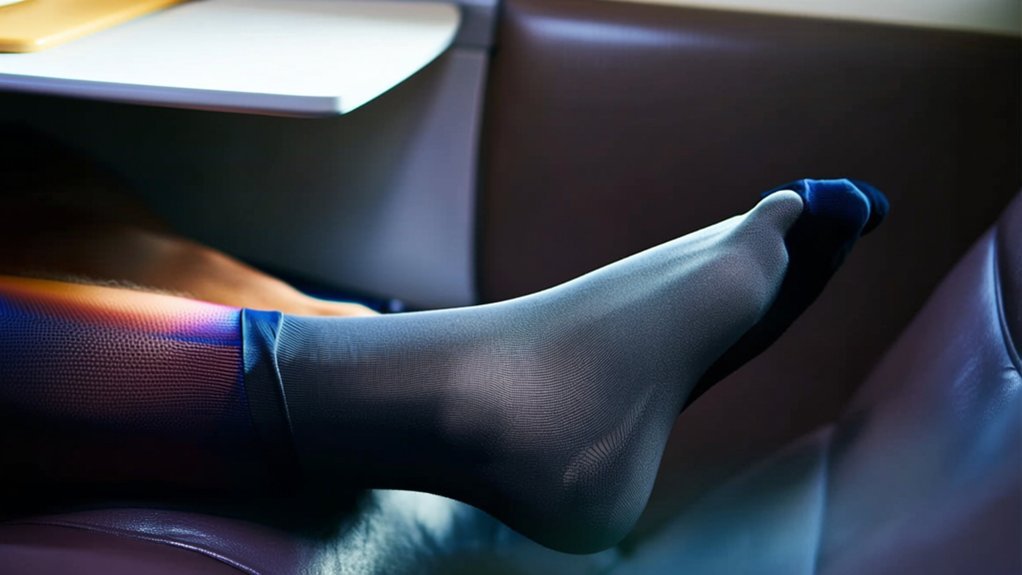
When choosing compression socks for a long flight, you’ll want to consider the right compression level—too tight can be uncomfortable, while too loose won’t do much good. Material breathability is also key, especially if you’re prone to sweating or have sensitive skin, because nobody wants soggy socks making things worse. Finally, proper fit and easy-to-use designs should feel snug without constricting, and durable, washable materials will keep your favorite pair going through many miles of travel.
Compression Level Suitability
Picking the right compression level for your socks when traveling long distances depends on your needs and your doctor’s advice. For most people, 15-20 mmHg gives gentle support. It helps prevent discomfort and mild swelling, which is good if you sometimes notice your legs feel puffy.
If you have ongoing swelling, varicose veins, or if you’re recovering from surgery, a higher compression level of 20-30 mmHg might be better. But, always check with your healthcare provider before choosing this level.
Levels above 30 mmHg are usually for more serious circulation problems. These socks should be used only with medical advice and supervision.
Your choice should be based on your health, how active you are, and what your doctor recommends. Think of it like finding the right shoe size—pick what fits best for you. When you get the right fit, your travel will be more comfortable.
Material Breathability Factors
If you want to stay comfortable and dry on a long flight, make sure your compression socks are breathable. Socks made from materials like nylon and spandex let air flow through. This helps keep your skin cool and reduces sweat. When your skin stays dry, you’re less likely to get irritated.
Look for socks that wick moisture away. These fabrics absorb sweat and help it evaporate. That keeps your legs feeling fresh even after hours in cramped seats. The way the sock is woven also matters. Looser weaves let air in better than tight-knit fabrics. This helps stop heat from trapping inside.
Breathable socks can also help keep your body temperature steady. They prevent you from feeling overheated and sticky. Plus, wearing socks that breathe well lowers the chance of fungus or skin infections. Moisture can cause those problems, so good breathability helps protect your skin.
In simple words, choose socks that let air in and take sweat away. They make your flight more comfortable and healthy.
Proper Fit and Sizing
Getting the right size for compression socks is very important, especially for long flights. These socks give your legs extra support and keep you comfortable. If they fit right, they should feel snug but not tight enough to hurt or stop blood from flowing.
To find your perfect size, measure the widest part of your calf. Don’t guess! Use a tape measure and write down the size. Then, look at the size chart from the sock maker. It tells you which size matches your measurement.
Wearing socks that are too tight can hurt or block blood flow. Wearing socks that are too loose won’t give enough support. Both can make you uncomfortable. The best socks have a gentle, graduated pressure — tight at the ankle and looser higher up. This helps blood move easily from your feet up your legs.
When your socks fit well, they stay comfortable and help prevent swelling. They support your legs mile after mile, making your trip more pleasant.
Ease of Use Design
When picking compression socks for a long flight, ease of use matters a lot. You don’t want to struggle with tricky fasteners at 30,000 feet. Look for socks with zippers or pull-on tabs. These make putting on and taking off the socks quick and easy. This is helpful if you have trouble moving or have sore joints. Socks that are seamless or have flat stitches also help. They feel smoother against your skin and prevent irritation after hours of wear. Reinforced heel and toe areas make the socks last longer and help keep their shape. Some socks let you change the compression level easily, so you can adjust for extra comfort or loosen them if needed. Good design saves time, effort, and stress during long flights.
Durability and Washability
Durability and washability are important when choosing compression socks. You want socks that stay in good shape after many wears and washes. Look for socks made from strong materials like nylon or spandex. These fabrics don’t tear or fray easily. Reinforced stitching and extra fabric in tough spots can help the socks last longer, even after many washes.
The fabric should also be breathable and quick-drying. This keeps your feet comfortable and helps keep the socks fresh. Make sure the colors won’t fade. Socks with colorfast dyes stay bright, even after many laundry cycles.
Follow the washing instructions on the tag. Usually, gentle cycles or hand washing work best. Proper care helps the compression stay firm and keeps the socks elastic. This makes sure they work well and last a long time on your trips or daily wear.
Style and Wearability
Since you’ll wear compression socks for many hours, choosing the right pair matters. Pick socks that are stylish and comfy. Look for neutral colors like beige, black, or gray. These go well with most clothes and don’t look like medical gear. Choose lightweight fabrics like nylon or spandex. These keep your legs cool and comfortable, even on hot days.
Make sure the socks have a good stay-up band. This prevents them from slipping down when you are sleeping or relaxing. Pick socks that can work with different outfits. This way, you don’t need many pairs. Choose colors that match your clothing. That way, your socks are both useful and nice to look at.
Getting the right compression socks makes travel easier and stay comfortable all day.
Price and Value
The cost of compression socks can change a lot depending on what they offer. Usually, more expensive socks are made with better materials that last longer. Medical-grade socks tend to cost more because they give the right amount of compression to help with swelling. Cheaper socks may save money at first, but they might fall apart or lose their stretch faster. That means you could end up buying new ones often, which adds up. Spending more on good-quality socks can save you money in the end. They last longer, feel more comfortable, and work better. Imagine buying a reliable pair of shoes for a long walk. It’s worth paying a little extra for peace of mind and comfort.
FAQs
Are Compression Socks Suitable for All Age Groups?
Yes, compression socks suit all age groups, but you should choose the right size and compression level. Consult with a healthcare provider if needed, especially for children, seniors, or those with specific health conditions.
How Do I Know if Compression Socks Are Too Tight?
You’ll know compression socks are too tight if they leave marks on your skin, cause numbness or tingling, or feel painfully restrictive. Always choose the right size and consult a healthcare professional if unsure about proper compression levels.
Can Compression Socks Prevent Deep Vein Thrombosis (DVT)?
Yes, compression socks can help prevent DVT by improving blood flow and reducing blood pooling in your legs during prolonged inactivity. Make sure to choose the right compression level and size for effective protection and comfort.
Are There Any Medical Conditions That Contraindicate Compression Sock Use?
You shouldn’t use compression socks if you have severe peripheral artery disease, active skin infections, or certain heart conditions without medical advice. Always consult your healthcare provider to guarantee they’re safe for your specific health situation.
How Often Should I Replace Compression Socks During Travel?
You should replace your compression socks if they become damp, dirty, stretched out, or lose their snug fit. Ideally, buy an extra pair for long trips and change them halfway through if you notice any discomfort or wear.

Meet Amelia Raina, the adventurous soul behind TravelersEnthusiasm.com. With a heart set on exploration, she crafts tales that whisk readers from European alleys to Asian landscapes. Raina’s stories are genuine, reflecting her deep connections and reverence for diverse cultures. When not traveling, she’s sketching in cafes or exchanging tales with fellow wanderers.
Last update on 2026-02-01 / Affiliate links / Images from Amazon Product Advertising API
