Minolta MND23 Camera Review: Is It Worth Your Money?
Looking for a simple point and shoot camera? The Minolta MND23 might catch your eye. It promises 48MP photos and 4K video in a small body.
This camera aims at casual users. People who want a break from phone cameras will find it interesting. It has a compact design that fits in any bag.
But does it perform well? Many buyers report mixed results. The autofocus feels slow. The image quality often disappoints too.
In this review, we break down every detail. We cover the specs, the real world performance, and the user feedback. You will learn if this camera fits your needs.
We also compare it to other options on the market. By the end, you will know exactly what to expect. Let’s see if the Minolta MND23 lives up to its promises.
In a Nutshell
Here is the quick summary you need before deciding on the Minolta MND23.
-
Sensor setup: It uses 13MP CMOS sensors on both the main and selfie cameras. Photos get processed into 48MP JPEG files.
-
Video power: You get 4K Ultra HD recording. But it runs at just 10fps, which feels choppy for action shots.
-
Zoom and lens: The f/2.2 lens pairs with a 16x digital zoom. Autofocus works, but users report real lag.
-
Storage included: This camera comes with 128GB of built in storage. You won’t need to buy a memory card right away.
-
Screen and stabilization: A 2.8-inch IPS LCD screen shows your shots. Digital image stabilization helps reduce shaky footage.
-
The catch: Many reviewers call the image quality weak. Some even compare it to a basic webcam.
This camera looks good on paper. But real world performance tells a different story. Menu navigation feels clunky too. Keep these points in mind as we dig deeper below.
Key Features and Specifications
The Minolta MND23 packs several features that appeal to casual photographers. Let’s explore what makes this camera tick and where it falls short.
Autofocus Performance and Speed
The camera uses an f/2.2 autofocus lens. This aperture allows decent light intake in moderate conditions. However, users report that autofocus speed lags noticeably. You may experience shutter lag when you press the button. This delay can frustrate you if you want to capture fast moving subjects.
Zoom Capabilities
The 16x digital zoom gives you flexibility in framing shots. Digital zoom works by cropping and enlarging your image. This means zoomed photos lose detail compared to optical zoom. The zoom is useful for distant subjects, but quality drops significantly at maximum extension.
Display and Stabilization Features
The 2.8-inch IPS LCD screen shows your images clearly. IPS technology delivers good viewing angles and color accuracy. Digital image stabilization helps reduce blur from hand movement. This feature works best in moderate lighting. In low light, stabilization becomes less effective because the sensor struggles to capture enough detail.
Storage and Recording Specs
Built in 128GB storage holds hundreds of photos and videos. You can record 4K Ultra HD video at 10 frames per second. This frame rate is lower than standard video, which can make motion appear choppy. The AVI format stores these files efficiently but requires compatible playback software.
Real World Performance Issues
The specs sound impressive on paper. The actual experience tells a different story. Image quality suffers from poor sensor performance. Colors appear washed out and details blur easily. Menu navigation feels clunky and slow. Processing takes time between shots, which interrupts your shooting rhythm.
Who Should Consider This Camera
This camera works best for casual snapshots and social media sharing. It suits travelers who value portability over image quality. If you need sharp, vibrant photos, you should explore other options. The MND23 delivers convenience but sacrifices technical performance.

- ULTRA-DETAILED 48MP PHOTOS: Capture sharp, vibrant images in 48-megapixel resolution—perfect for travel...
- 4K ULTRA HD VIDEO RECORDING: Shoot lifelike 4K video with natural motion and crisp quality—ideal for vlogs...
- REAR SELFIE LENS & FAST AUTOFOCUS: Built-in rear selfie lens makes capturing self-portraits effortless. Autofocus...

Last update on 2026-06-07 / Affiliate links / Images from Amazon Product Advertising API
Design and Build Quality
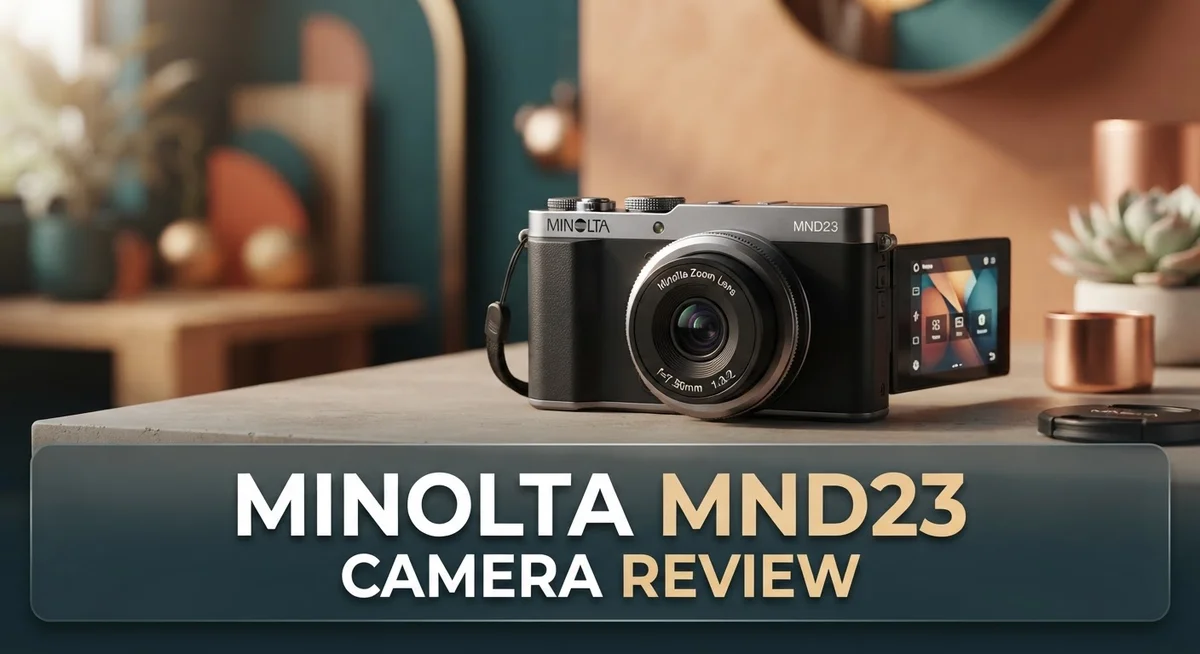
The Minolta MND23 sports a compact frame that fits easily into your pocket or bag. Its lightweight construction makes it ideal for travelers who want a camera without the bulk of traditional DSLRs. The body feels plastic, which is typical for cameras in this category.
The device measures modestly and weighs little, so carrying it around all day causes no strain. The grip area provides enough surface for a comfortable hold, though your fingers may feel cramped if you have larger hands. The button layout keeps essential controls within reach.
The 2.8-inch IPS LCD screen dominates the back panel. This display shows your shots with decent color reproduction and viewing angles that work from most positions. The screen helps you frame shots and navigate menus, though the interface itself feels sluggish in practice.
Build materials consist mainly of plastic components rather than metal or glass. This choice keeps the overall weight down but may not inspire confidence in durability. The camera lacks weather sealing, so moisture and dust pose risks during outdoor use.
The lens barrel extends when you power on the device. This retractable design saves space when the camera sits in your bag. The f/2.2 aperture remains fixed, meaning you cannot adjust light intake manually.
Physical controls include a power button, shutter release, and mode selector. The menu system relies heavily on screen navigation rather than dedicated buttons. Users often describe this approach as cumbersome and time consuming.
Connection options include USB ports for file transfer and charging. The built-in 128GB storage means you rarely need external memory cards, though the option exists if needed. Battery life varies depending on usage patterns, with video recording draining power faster than still photography.
Overall, the MND23 presents a straightforward design focused on simplicity. The compact size and lightweight construction appeal to casual users who prioritize portability. However, the all-plastic construction and menu navigation system reveal the camera’s entry-level positioning. Durability concerns may arise with regular use, particularly if you expose the device to harsh conditions.
Image and Video Performance
The Minolta MND23 captures images at 48MP in JPEG format, though the actual sensor resolution sits at 13MP on both the main and selfie cameras. This gap between advertised and real specs matters when you evaluate what you’ll actually get from your shots.
Image quality falls short of expectations. Many users describe the output as “webcam in a box” quality. Colors appear flat, details lack sharpness, and low light performance shows significant noise. The camera struggles to deliver the crisp, vibrant images you’d expect from a modern device.
The autofocus system uses an f/2.2 lens with 16x digital zoom. However, the autofocus operates slowly, and you’ll notice shutter lag when pressing the button. This delay makes it frustrating to capture moving subjects or spontaneous moments. The sluggish overall performance compounds this issue.
Video recording happens at 4K Ultra HD, but only at 10fps. Standard video runs at much higher frame rates, so 10fps creates choppy, unnatural motion. This limitation makes the 4K capability less useful than it sounds. For smooth video, you’ll want something else.
Digital image stabilization helps reduce blur from hand movement. The 2.8-inch IPS LCD screen displays your images clearly enough for composition, though it won’t reveal fine detail issues until you review footage later.
Real world testing reveals the performance problems. The menu system feels cumbersome to navigate, adding frustration when adjusting settings. Processing times lag between shots, limiting your ability to capture sequences quickly.
The camera includes 128GB of storage, which holds hundreds of photos and videos without requiring external cards. This convenience helps offset some performance shortcomings.
For casual snapshots and social media sharing, the MND23 functions adequately. The compact size makes it portable. But if you care about image quality, autofocus speed, or smooth video, you’ll find this camera limiting. The specs promise more than the actual output delivers, making real world results disappointing compared to what the marketing suggests.
Top 3 Alternatives
Canon PowerShot ELPH

- CAPTURE SHARP EVERYDAY MEMORIES - The Canon PowerShot ELPH 360 HS features a 20.2MP CMOS sensor and DIGIC 4+ Image...
- 12X OPTICAL ZOOM WITH IMAGE STABILIZATION - Capture close-up shots with the versatile 12x Optical Zoom lens while...
- COMPLETE READY-TO-USE CAMERA BUNDLE - Includes a Green Extreme 64GB microSDXC memory card, SD adapter, USB...
Last update on 2026-08-31 / Affiliate links / Images from Amazon Product Advertising API
The Canon PowerShot ELPH series offers compact design with strong image quality. These cameras fit easily in your pocket while delivering sharp photos in various lighting conditions. The ELPH line features automatic settings that work well for beginners. You get reliable performance without complicated menus.
The autofocus system locks onto subjects quickly. Battery life lasts through a full day of shooting. The cameras handle both still photos and video recording. Color accuracy remains consistent across different scenes.
Sony Cyber-shot DSC

- Capture your videos in HD Movie mode (720p)
- Capture breathtaking images in Sweep Panorama Mode
- 16.1 megapixel 2.7-inch LCD screen for easy viewing
Last update on 2026-08-31 / Affiliate links / Images from Amazon Product Advertising API
Sony’s Cyber-shot DSC cameras bring advanced sensor technology to compact photography. These models capture excellent detail even in low light situations. The autofocus system tracks moving subjects with precision. You’ll notice vibrant colors and natural skin tones in your photos.
The DSC line includes various zoom ranges to match different shooting styles. Video recording quality reaches high standards. Built-in image stabilization keeps your footage smooth. The menu system responds quickly to your commands.
Fujifilm FinePix XP

- FUJIFILM X-S20 Mirrorless Camera with XC 15-45mm f/3.5-5.6 OIS PZ Lens (USA Warranty) 16781943
- SanDisk 128GB SDXC Extreme PRO Memory Card, Vivitar Memory Card Wallet, SD Card Reader
- Spare Power2000 NP-W235 Battery (ACD-451), Premium Tech AC/DC Travel Charger for NP-W235 battery,
Last update on 2026-08-31 / Affiliate links / Images from Amazon Product Advertising API
Fujifilm’s FinePix XP series specializes in rugged outdoor performance. These cameras survive water, dust, and drops without special protection. The durable build makes them perfect for adventure photography. You can shoot at the beach or on hiking trails without worry.
Image quality remains strong despite the tough design. The XP cameras produce natural-looking photos with good contrast. Battery performance holds up well during extended use. The compact size means you’ll actually carry it everywhere.
Each alternative brings different strengths. Choose based on your primary shooting environment and preferred features.
Autofocus and Stabilization
The Minolta MND23 offers both autofocus and digital stabilization features that sound promising on paper. However, real world performance tells a different story about how these systems actually work in practice.
The autofocus system uses an f/2.2 lens that struggles with speed and accuracy. Users consistently report significant shutter lag when trying to capture moments. The camera takes noticeably longer than expected to lock focus and fire the shutter. This delay makes it frustrating for capturing moving subjects or spontaneous scenes. You will find yourself missing shots due to this sluggish response time.
The 16x digital zoom provides flexibility when framing your shots. You can crop closer to distant subjects without physically moving. However, digital zoom simply enlarges pixels rather than capturing true detail. This approach results in softer, less sharp images compared to optical zoom found on better cameras.
Digital image stabilization helps reduce blur from hand movement during shooting. This feature works by processing images after capture. The system attempts to compensate for camera shake, which is useful for handheld video recording. Yet the stabilization cannot fully overcome the camera’s other performance limitations.
Video recording happens at 4K Ultra HD resolution, but only at 10 frames per second. Standard video typically runs at 24fps, 30fps, or higher. The 10fps rate produces choppy, jerky motion that looks unnatural. This makes video output unsuitable for anything beyond basic clips.
The combination of slow autofocus, digital zoom limitations, and choppy video creates a frustrating shooting experience. The gap between specifications and actual performance is substantial. Many users describe the results as disappointing compared to their expectations.
If you need reliable autofocus and smooth video, this camera falls short. The stabilization feature alone cannot compensate for the sluggish focus system. Better options exist for photographers seeking dependable autofocus performance and smooth video capture. The MND23 works only for those willing to accept significant compromises in responsiveness and video quality.
User Interface and Navigation
The Minolta MND23’s menu system presents one of the biggest challenges when you first hold this camera. Navigating through settings feels slow and unintuitive. You’ll find yourself clicking through multiple layers to reach basic adjustments.
The physical button layout keeps things simple on the surface. A power button sits on top, the shutter release positions where your finger naturally rests, and a mode selector lets you switch between photo and video quickly. These controls feel responsive under your thumb.
However, the real frustration emerges once you dive into the on-screen menus. The 2.8-inch IPS LCD screen displays options clearly enough, but the organization lacks logic. You bounce between different sections to adjust exposure, white balance, or focus modes. What should take seconds often takes minutes.
Accessing advanced features requires patience. The camera buries resolution settings, zoom preferences, and stabilization toggles deep within nested menus. First-time users spend considerable time hunting for functions they expect to find immediately. This cumbersome structure slows down your shooting workflow.
The autofocus activation process adds another layer of complexity. You must navigate specific menu paths to enable or disable autofocus features. The camera doesn’t offer quick-access buttons for these essential functions. This design choice feels outdated compared to modern camera interfaces.
Switching between shooting modes happens smoothly through the physical selector. Moving from stills to 4K video recording takes just a turn of the dial. This one bright spot breaks up the otherwise frustrating menu experience.
The LCD screen itself performs adequately for framing shots. It shows your subject clearly and displays important information like battery level and storage remaining. The brightness adjusts automatically in different lighting conditions, which helps visibility outdoors.
Menu responsiveness lags noticeably when you make selections. After tapping an option, the camera takes a moment to register and display the next screen. This delay compounds the frustration of an already cumbersome system.
Overall, the user interface feels like an afterthought. The physical controls work fine, but the software experience needs significant improvement. Casual photographers might overlook these issues, but anyone wanting quick adjustments will find the navigation tedious and time-consuming.
Pros and Cons
Pros
- Compact and portable design fits easily in bags or pockets
- Autofocus with digital image stabilization reduces blur during handheld shooting
- 16x digital zoom gives you flexibility when framing distant subjects
- 4K Ultra HD video recording captures high resolution footage
- Includes 128GB storage so you won’t need external memory cards
Cons
- Image quality feels like a webcam rather than a real camera
- Autofocus speed is slow with noticeable shutter lag between shots
- 4K video records at only 10fps, making motion appear choppy and unnatural
- Menu system feels cumbersome and frustrating to navigate during actual use
Who Should Buy It
The Minolta MND23 works best for casual users who prioritize portability over professional results. If you want a camera that fits in your pocket and takes basic photos, this model delivers on size and convenience.
Beginners exploring digital photography might appreciate the straightforward button layout. The physical selector makes switching between modes simple. You won’t feel overwhelmed by excessive controls when you first pick it up.
Travel photographers on a tight schedule could find value here. The compact design means less weight to carry. The 128GB built in storage eliminates the need for memory cards during trips. You can shoot continuously without worrying about running out of space.
However, you should avoid this camera if you demand quality results. The image output resembles a webcam rather than a proper camera. If sharp, detailed photos matter to you, look elsewhere. Professional photographers will find the performance frustrating and inadequate.
Content creators who need smooth video should skip this model. The 4K recording at 10fps produces choppy, unnatural motion. Your footage will look stuttering and unprofessional. If video quality matters for your work, this camera cannot deliver.
Users who need fast autofocus should not buy this camera. The focusing system moves slowly with noticeable shutter lag between shots. If you photograph moving subjects or fast paced scenes, delays will ruin your shots.
People who dislike complicated menus should reconsider. The on screen interface feels cumbersome and sluggish. Accessing advanced features requires patience and frustration. If you want quick, intuitive controls, this design will annoy you.
This camera suits someone who needs a simple, portable device for occasional snapshots. The compact form factor and basic functionality serve that purpose. You accept lower image quality in exchange for convenience and ease of transport.
The Minolta MND23 remains a niche product. It occupies an awkward middle ground between smartphones and real cameras. Most people would get better results using their phone. Only buyers who specifically want a dedicated camera for casual use, despite its limitations, should consider this model.
Final Verdict
The Minolta MND23 leaves a mixed impression after thorough testing. It looks appealing on paper with its zoom range and video specs. Real world performance tells a different story.
This camera works as an entry point, not a destination. It suits people who want to try photography without heavy commitment. Serious photographers will feel limited quickly.
The gap between marketing claims and actual output stands out. 48MP stills sound impressive, but the sensor struggles to deliver sharp, clean images. Low light shots suffer the most.
Comparing this to alternatives like the Sony a6000 shows a clear difference in build quality. Mirrorless options give you faster focus and better color accuracy. The MND23 cannot compete on those fronts.
Still, some buyers do not need professional results. Parents capturing family moments or students learning basics might enjoy this camera. It handles simple tasks without much fuss.
Reliability remains questionable over long term use. Slow processing and menu lag point to underlying hardware limits. This is not a device you rush with.
We recommend this camera only if your expectations stay realistic. Think of it as a fun gadget rather than a serious tool. Anyone chasing crisp photos or smooth video should look elsewhere.
The verdict is straightforward: buy this for casual, low pressure shooting. Skip it if image quality matters to you. Skip it if you shoot fast moving subjects often.
Overall, the Minolta MND23 fills a small niche well. It does not try to be a professional camera, and that is fine. Just know what you are getting before you commit.
Match your expectations to the product, and you will likely feel satisfied. Push it beyond casual use, and frustration follows quickly. Choose wisely based on your actual photography needs.
Frequently Asked Questions
Does the Minolta MND23 work well for video content creation?
The MND23 records 4K Ultra HD video, but the 10fps frame rate creates choppy motion. Your footage will look stuttering and unnatural, especially during fast movements. If you produce content that requires smooth playback, this camera will disappoint you. Professional videographers should look elsewhere.
Can you rely on the autofocus system for fast shooting?
No. The autofocus moves slowly with noticeable shutter lag between shots. You’ll experience delays when trying to capture quick moments. This lag makes the camera frustrating for spontaneous photography. Fast shooting situations will test your patience.
What type of user should actually buy this camera?
This camera suits casual users who take occasional snapshots and value portability. Beginners exploring digital photography might appreciate the straightforward button layout. Travelers on a tight schedule who don’t demand quality results could find it useful. The device works best when expectations stay realistic and low pressure.
How does image quality compare to other cameras?
The image quality feels like a webcam rather than a real camera. The gap between marketing claims and actual output stands out clearly. When you compare this to alternatives like the Sony a6000, the difference in build quality becomes obvious. This is not a serious photography tool.
Is the menu system easy to navigate?
No. The menu feels cumbersome and frustrating to use during actual shooting. You’ll spend extra time hunting for settings instead of focusing on your shots. Simpler is better here, but even simplicity has limits with this device.

Meet Amelia, the adventurous soul behind TravelersEnthusiasm.com. With a heart set on exploration, she crafts tales that whisk readers from European alleys to Asian landscapes. Amelia‘s stories are genuine, reflecting her deep connections and reverence for diverse cultures. When not traveling, she’s sketching in cafes or exchanging tales with fellow wanderers.