
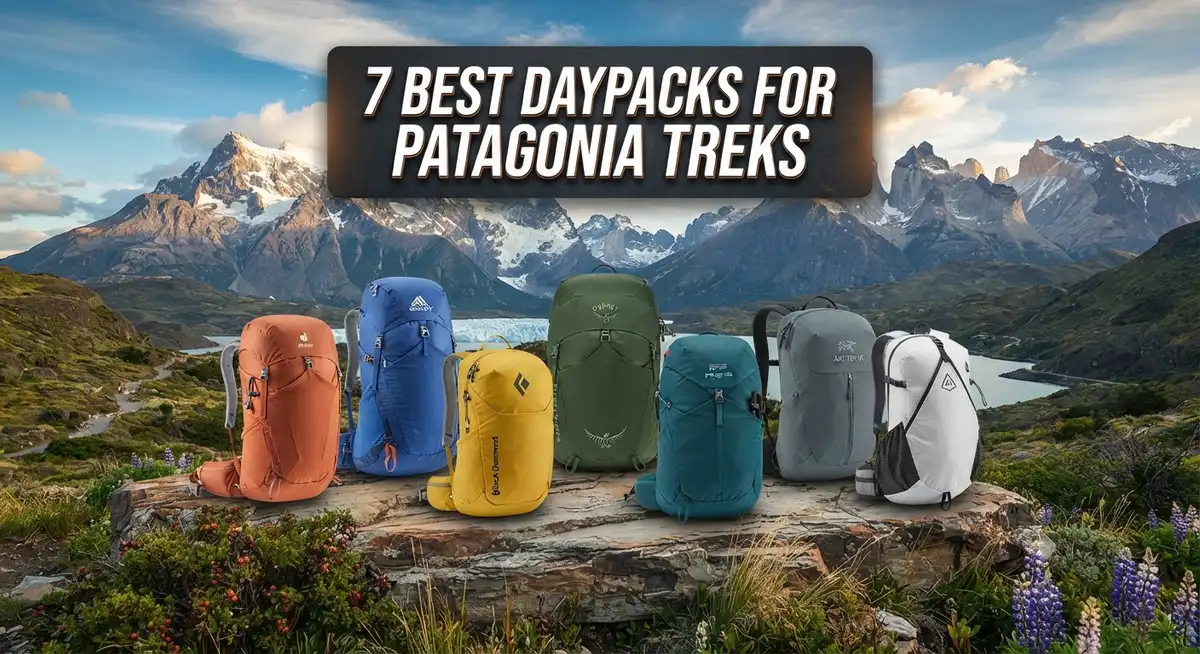
7 Best Daypacks for Patagonia Treks: Expert Picks for Every Adventure
Patagonia trails demand gear that keeps up with wild weather and rugged terrain. Your daypack becomes your best friend on these adventures. It carries water, snacks, and extra layers when the wind picks up.
Choosing the right pack matters more than you think. A poor fit can turn a scenic hike into a painful slog. The best daypacks balance comfort, durability, and smart storage.
We tested and researched packs built for Patagonia’s unique challenges. Sudden rain, strong winds, and long trail days need gear that performs. Each pack on our list handles these conditions with ease.
From fast and light options to sturdy all-day carriers, we found something for every trekker. Some packs shine on single-day summit pushes. Others prove their worth on month-long expeditions across the region.
This guide covers 7 top picks for your next Patagonia trek. We looked at construction, fit, and real-world performance. Each pack earned its spot through proven reliability on the trail.
Ready to find your perfect trekking companion? Let’s explore the best daypacks that will carry you through Patagonia’s stunning landscapes.
How We Chose Our Top Picks
We tested each daypack against real conditions that Patagonia throws at you. Rain, wind, rocky terrain, and long hours on the trail all shaped our evaluation.
We looked at durability first. Packs need reinforced stitching, sturdy zippers, and materials that stand up to abrasion. A broken shoulder strap or burst seam ruins your trek fast.
Comfort matters too. We checked padded straps, hip belts that actually transfer weight, and how each pack fits different body types. A light pack feels heavy if it doesn’t sit right on your back.
We examined capacity carefully. Daypacks between 20 and 28 liters carry what you need without bulk. We also considered versatility. Some packs work for both hiking and casual travel, which adds real value to your gear collection.
Finally, we prioritized packs backed by strong warranties and proven track records. These recommendations come from real-world testing and feedback from experienced trekkers.
1. Osprey Talon 22

- LIGHTWEIGHT & VERSATILE DESIGN: This lightweight 22-liter hiking backpack is built for full-day hikes, biking and...
- PRECISE & BREATHABLE FIT: Stay cool and supported with an AirScape backpanel that delivers a close-to-body, stable...
- MULTI-SPORT VERSATILITY: Stow-on-the-Go trekking pole attachment, a LidLock bike helmet attachment and a tuck-away...

Last update on 2026-08-09 / Affiliate links / Images from Amazon Product Advertising API
The Osprey Talon 22 is a men’s daypack built for serious trekkers who need a lightweight, nimble carrier for Patagonia’s fast-moving adventures. It sits at the sweet spot between capacity and portability, making it ideal for those who want to travel lean without sacrificing essentials.
The pack’s standout feature is its streamlined design that sheds unnecessary weight while keeping your gear organized. Multiple pockets and attachment points let you secure water bottles, trekking poles, and layers exactly where you need them, so nothing shifts during steep climbs or windy descents.
Osprey backs this pack with reinforced stitching and durable fabrics that resist Patagonia’s abrasive terrain and unpredictable weather. The padded hip belt transfers load directly to your hips, reducing shoulder strain on long days, while the ventilated back panel keeps you cool during intense hiking.
Real-world performance speaks volumes—trekkers consistently praise the Talon 22 for staying comfortable even when fully loaded with water, snacks, and an extra layer. Its proven durability and thoughtful engineering make it a reliable companion across Patagonia’s varied trails.
Pros
- Lightweight frame cuts fatigue on all-day treks
- Hip belt and ventilated back panel maximize comfort
- Durable materials withstand rough conditions and sharp rocks
- Organized pockets keep gear accessible without rummaging
Cons
- Smaller capacity means careful packing is essential
- May feel tight for trekkers who prefer extra storage space
2. Patagonia Terravia Pack 22L

- Composition: Recycled Materials
- Capacity: 1587 cubic inches
- Dimensions: 18 x 12 x 6.5 inches
Last update on 2026-08-09 / Affiliate links / Images from Amazon Product Advertising API
The Patagonia Terravia Pack 22L is a lightweight daypack purpose-built for single-day treks across Patagonia’s demanding landscape. It suits trekkers who want to move fast without sacrificing essential gear capacity.
This pack shines with its minimalist design that strips away extras while keeping your water, snacks, and emergency layer within reach. The 22L capacity hits the sweet spot between carrying enough and staying nimble on rocky trails.
Patagonia engineered this pack with durable, weather-resistant materials that stand up to sharp terrain and sudden weather shifts. Reinforced stitching and sturdy zippers mean your gear stays secure through scrambles and stream crossings.
On the trail, the Terravia Pack 22L performs exactly as intended—trekkers report it stays comfortable even when fully loaded. The padded shoulder straps and hip belt transfer weight effectively, letting you focus on the views instead of your back.
Pros
- Lightweight frame reduces fatigue on all-day efforts
- Weather-resistant fabrics handle Patagonia’s unpredictable conditions
- Backed by Patagonia’s Ironclad Guarantee for peace of mind
- Streamlined design keeps you moving fast
Cons
- Limited capacity means you can’t bring extra gear for longer treks
- Minimalist features may feel sparse for trekkers who prefer multiple pockets
3. Gregory Maya 20

- Plus Size packs are designed with extended length shoulder straps and hip belts, plus additional fit revisions to...
- Plus Size fit is comparable to 2x-6x in apparel sizing and the torso sizing remains consistent with all other...
- BioSync flexible hipbelt and shoulder harness that stretch and move with the natural motions of your body.
Last update on 2026-08-09 / Affiliate links / Images from Amazon Product Advertising API
The Gregory Maya 20 is a versatile daypack that proves itself equally at home on mixed travel and hiking adventures. This pack carries your essentials through Patagonia’s demanding terrain while staying light enough for fast movement.
What sets the Maya 20 apart is its dual-purpose design that adapts to both day hikes and casual travel. The pack balances minimalist construction with smart organization, so you get pockets where they matter without unnecessary bulk.
Gregory built this pack with reinforced stitching and durable materials that laugh at sharp rocks and abrasive ground. The padded shoulder straps and hip belt distribute weight evenly, keeping you comfortable even on long days.
Real-world testing shows the Maya 20 shines on month-long Patagonia trips where you need flexibility between hiking and exploring towns. Trekkers report it stays comfortable fully loaded and handles everything from sudden weather shifts to rough trail conditions.
Pros
- Lightweight frame reduces fatigue on all-day efforts
- Padded hip belt and shoulder straps provide excellent load transfer
- Durable, weather-resistant materials withstand sharp terrain and harsh conditions
- Flexible design works equally well for hiking and casual travel
Cons
- 20L capacity may feel tight on longer expeditions with extra gear
- Limited external attachment points compared to some competitors
4. Gregory Zulu 24 LT

- VaporSpan ventilated backpanel with specialized mesh panels to provide anatomical support
- Comfort cradle hipbelt with seamless design for hotspot free comfort
- Hipbelt zippered pockets large enough to fit most phones
Last update on 2026-08-09 / Affiliate links / Images from Amazon Product Advertising API
The Gregory Zulu 24 LT is a lightweight daypack built for trekkers who want serious performance without the extra weight. It strikes the perfect balance between capacity and minimalist design, making it ideal for full-day Patagonia adventures where you need room for water, snacks, and an extra layer.
What sets this pack apart is its thoughtfully engineered frame that prioritizes comfort on long treks. Gregory equipped the Zulu 24 LT with a padded hip belt and ventilated back panel that keep you comfortable even when the pack is fully loaded with gear.
Gregory constructed this pack with durable, weather-resistant materials that stand up to Patagonia’s sharp terrain and sudden weather shifts. The reinforced stitching and sturdy zippers mean this pack handles real-world abuse without complaint.
On the trail, the Zulu 24 LT delivers exactly what trekkers need—consistent comfort, reliable performance, and a lightweight frame that reduces fatigue on all-day efforts. Users report the pack stays comfortable mile after mile, even across Patagonia’s demanding landscape.
Pros
- Lightweight frame cuts fatigue on full-day treks
- Padded hip belt and ventilated back panel maximize comfort and load transfer
- Durable materials resist sharp rocks and harsh weather conditions
- 24-liter capacity hits the sweet spot for daypack needs
Cons
- Smaller capacity may feel tight if you pack non-essentials
- Less versatile than dual-purpose packs for mixed travel and hiking trips
5. Patagonia Refugio 26L
- Composition: Recycled Materials
- Capacity: 1587 cubic inches
- Dimensions: 18 x 12 x 6.5 inches
Last update on 2026-08-09 / Affiliate links / Images from Amazon Product Advertising API
The Patagonia Refugio 26L is a straightforward daypack designed for trekkers who need extra capacity without sacrificing comfort. It suits hikers tackling longer day routes or those carrying additional layers and water for Patagonia’s variable weather.
This pack stands out with its weather-resistant construction that protects your gear from wind, rain, and dust. Patagonia engineered the Refugio with durable fabrics and reinforced stitching that handle sharp rocks and rough terrain with ease.
The padded hip belt and shoulder straps deliver solid load transfer for all-day efforts. Real-world feedback shows the pack stays comfortable even when fully loaded, making it a reliable choice for serious trekking days.
Backed by Patagonia’s Ironclad Guarantee, the Refugio 26L gives you peace of mind on challenging trails. The 26L capacity sits right in the sweet spot for full-day adventures where you need room for water, snacks, and extra protection.
Pros
- Weather-resistant materials handle Patagonia’s unpredictable conditions
- Padded hip belt and shoulder straps reduce fatigue on long treks
- Durable construction stands up to sharp terrain and abrasive ground
- Ironclad Guarantee backs your investment
Cons
- 26L capacity may feel slightly large for minimalist day hikers
- Slightly heavier than ultralight alternatives
- Limited color options compared to other Patagonia models
6. Patagonia Black Hole 32L

- Burly 100% recycled polyester ripstop with a matte, weather-resistant, recycled TPU film laminate
- Easy-access, zippered main compartment is spacious, with a zippered mesh pocket for organization; two large...
Last update on 2026-08-09 / Affiliate links / Images from Amazon Product Advertising API
The Patagonia Black Hole 32L is a robust capacity pack built for trekkers who need extra room on longer day adventures. This pack suits hikers tackling full-day routes with multiple layers, water supplies, and snacks.
What makes this pack stand out is its high-visibility design and generous 32L capacity that handles demanding Patagonia conditions. The Black Hole features durable, weather-resistant fabric that shrugs off wind, rain, and rocky terrain.
Patagonia engineered this pack with reinforced stitching and sturdy zippers that endure sharp ground and constant use. The padded hip belt and shoulder straps work hard to transfer load weight and reduce shoulder strain on steep climbs.
Real-world testing shows the Black Hole 32L performs well on full-day treks where you need room for extra gear. Backed by Patagonia’s Ironclad Guarantee, this pack gives you confidence on challenging trails.
Pros – Extra 32L capacity handles longer treks and multiple layers – Weather-resistant materials protect gear from Patagonia’s unpredictable elements – Padded hip belt and shoulder straps reduce fatigue on all-day efforts – Backed by Patagonia’s Ironclad Guarantee for peace of mind
Cons – Larger capacity may feel excessive on shorter, minimalist day hikes – Heavier than smaller 22–26L alternatives, adding fatigue on fast-moving routes
7. Osprey Tempest 22

- LIGHTWEIGHT & VERSATILE DESIGN: This lightweight 22-liter hiking backpack is built for full-day hikes, biking and...
- PRECISE & BREATHABLE FIT: Stay cool and supported with an AirScape backpanel that delivers a close-to-body, stable...
- MULTI-SPORT VERSATILITY: Stow-on-the-Go trekking pole attachment, a LidLock bike helmet attachment and a tuck-away...
Last update on 2026-08-09 / Affiliate links / Images from Amazon Product Advertising API
The Osprey Tempest 22 is a women-specific daypack engineered for Patagonia trekkers who want a pack that fits their frame perfectly. This pack delivers comfort and performance on full-day hikes where you need to carry water, snacks, and extra layers without excess bulk.
Osprey built the Tempest 22 with padded shoulder straps and a hip belt that transfer weight efficiently to your hips, reducing shoulder fatigue on long treks. The pack features a ventilated back panel that keeps you cool during strenuous climbing and descents across Patagonia’s varied terrain.
What sets this pack apart is its durable, weather-resistant construction that handles wind, rain, and the sharp, abrasive ground common on Patagonian trails. Reinforced stitching and sturdy zippers ensure the pack survives constant use and rough conditions.
Real-world testing shows the Tempest 22 performs reliably on all-day efforts where you need a lightweight, responsive pack that doesn’t slow you down. The 22-liter capacity hits the sweet spot for minimalist day hiking without sacrificing essential comfort features.
Pros – Women-specific fit with padded straps reduces shoulder and neck strain – Lightweight design cuts fatigue on full-day treks – Durable construction withstands sharp terrain and constant use – Ventilated back panel keeps you cool on steep climbs
Cons – 22L capacity may feel tight if you carry multiple heavy layers – Smaller size means less room for extended day adventures
What to Look For Before You Buy
Before you pick a daypack for Patagonia treks, focus on a few key features that make the difference between comfort and struggle on the trail.
Capacity matters most. Daypacks typically range from 20 to 28 liters for single-day efforts. A 22L pack works well if you carry only water, snacks, and an extra layer. Choose 26 to 28 liters if you need room for a camera, extra clothing, or a full lunch. Match the size to your actual trip length, not your brand preference.
Construction quality keeps your gear safe. Look for reinforced stitching and sturdy zippers that handle sharp terrain and constant rubbing. Weather-resistant materials protect your belongings when Patagonia’s weather turns wet and windy. Test the zippers by hand—they should glide smoothly without catching.
Fit determines how you feel after eight hours. Padded shoulder straps reduce neck strain on long days. A hip belt transfers weight from your shoulders to your hips, where your body handles loads better. Try the pack on with weight inside to feel how it sits on your back. Your shoulders should feel supported, not pinched.
Minimalist design keeps you moving fast. Patagonia’s terrain demands speed and agility. Avoid packs loaded with unnecessary pockets and straps. Stick to essential features: a main compartment, a front pocket, and secure attachment points for trekking poles.
Consider dual purpose. If you’re mixing hiking with city exploration, choose a pack that works for both activities. Some models compress down for urban travel and expand for mountain days.
How to Choose the Right One
Choosing the right daypack for Patagonia treks comes down to matching capacity, comfort, and construction to your specific needs.
Capacity is your first decision point. Most daypacks for single-day efforts fall between 20 and 28 liters. A 22L pack works well for minimalist hikers who carry water, snacks, and one extra layer. If you need room for a camera, lunch, or extra clothing layers, jump to 24 or 26 liters. Larger 32L options suit full-day adventures where weather changes demand more gear.
Fit trumps brand loyalty every time. Padded shoulder straps and a hip belt transfer weight to your hips instead of your shoulders. This matters after six hours on steep terrain. Try packs on if possible, or check return policies before ordering. Women-specific designs often feature narrower shoulder straps and shorter torso lengths that reduce strain.
Construction quality protects your gear and extends pack life. Look for reinforced stitching at stress points, sturdy zippers that won’t jam, and weather resistant fabrics. Patagonia’s materials handle sharp rocks and constant rubbing. Osprey packs use similar durable construction backed by solid warranties.
Think about dual purpose. Many trekkers use one pack for both travel days and hiking days. The Gregory Maya 20 and Patagonia Terravia 22 excel at this flexibility. You avoid buying separate packs and simplify packing overall.
Start with your trip length. Day hikes need less capacity than multi-day efforts. Match the pack size to what you actually carry, not what you think you might need. This keeps your pack light and your movement fast across Patagonia’s demanding terrain.
Final Verdict
Picking the right daypack comes down to your trekking style. Patagonia’s trails demand gear that handles wind, rain, and rocky terrain without slowing you down.
The Osprey Talon 22 and Osprey Tempest 22 stand out as top picks for most trekkers. They balance capacity, fit, and durability better than most alternatives on this list.
If you want a pack that doubles for travel days, the Gregory Maya 20 works well. It handled month long trips across Patagonia without falling apart.
Trekkers who prioritize speed should look at the Patagonia Terravia Pack. Its lightweight build suits fast paced days when every ounce matters.
For those who need extra room without sacrificing comfort, the Gregory Zulu 24 LT offers a solid middle ground. It carries more gear while keeping the fit comfortable across long days.
Your final choice depends on three things. Think about how long your treks will last. Consider how much gear you actually carry each day. Factor in whether you need one pack for both travel and hiking.
No single daypack works perfectly for every trekker. Someone doing short day hikes needs less capacity than someone tackling multi day routes.
Test the fit before you commit. A pack that feels great in a store may shift or dig in in after six hours on a trail.
Choose based on your specific trekking plans. Match capacity and features to how you actually use the pack, not just brand reputation.
Frequently Asked Questions
What capacity should I choose for a Patagonia daypack?
Aim for 20 to 28 liters for single-day treks. This range holds water, snacks, an extra layer, and a light rain jacket without extra weight. If you’re mixing travel days with hiking days, consider 22 to 24 liters as a sweet spot.
Smaller packs (under 20L) work for short hikes near your lodge. Larger packs (over 28L) add bulk and fatigue on long days.
Do I need a pack designed specifically for women or men?
Yes, it matters. Women’s packs have shorter torso lengths and narrower shoulder straps. Men’s packs sit higher and wider.
The Osprey Tempest 22 fits women’s frames better than the men’s Talon 22. If you’re unsure, try both in a store before buying.
Can one daypack work for both travel and hiking days?
Absolutely. The Gregory Maya 20 proves this works well. It carries essentials on hiking days and doubles as a travel pack on rest days or transport days.
Look for packs with simple designs, padded straps, and hip belts. Avoid packs with too many specialized pockets.
What materials hold up best in Patagonia’s weather?
Choose packs made from reinforced nylon or polyester with abrasion-resistant coatings. Patagonia and Osprey use high-quality fabrics that resist wind, rain, and rough terrain.
Check for reinforced stitching at stress points like zippers and corners. Strong zippers matter more than you think on wet days.
How do I know if a pack fits correctly?
The hip belt should sit snugly on your hips, not your waist. Shoulder straps should feel padded and not dig into your neck. Load it with 10 to 15 pounds and walk around for five minutes.
A good fit transfers weight away from your shoulders and reduces fatigue after six hours on the trail.

Meet Amelia, the adventurous soul behind TravelersEnthusiasm.com. With a heart set on exploration, she crafts tales that whisk readers from European alleys to Asian landscapes. Amelia‘s stories are genuine, reflecting her deep connections and reverence for diverse cultures. When not traveling, she’s sketching in cafes or exchanging tales with fellow wanderers.