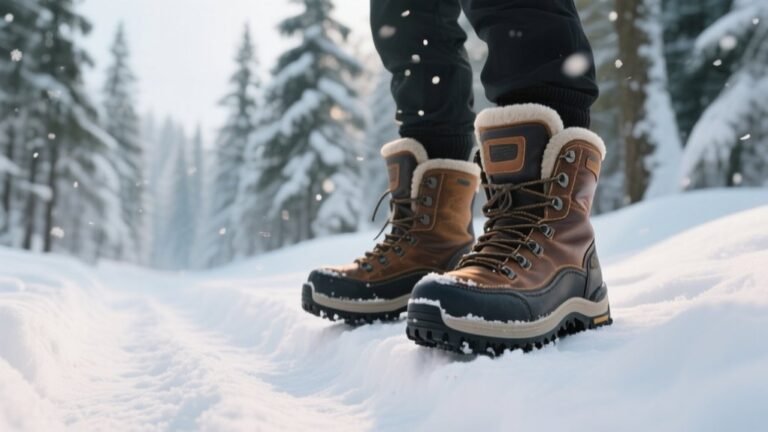
4 Best Snow Boots for Ski Trips in 2026: Stay Warm and Stylish
When preparing for your 2026 ski adventures, choosing the right snow boots can make all the difference between cozy comfort and numb toes on the mountain. The top models blend cutting-edge insulation like Thinsulate with waterproof tech such as Gore-Tex, tested under extreme cold and wet conditions to guarantee durability and dryness. From adjustable straps to reinforced soles, these selections promise both style and performance—perfect for tackling snow-covered slopes. Want to find boots that keep pace with your winter plans? Let’s explore what makes these options stand out.
NORTIV 8 Mens Insulated Waterproof Snow Ski Boots

- Waterproof material: Men snow boots features waterproof construction for waterproof & windproof, and synthetic toe...
- 3 warming system: (1) Removable, warm cushion faux fur insole offers all-day support & comfort. (2) 200g high...
- Durable slip resistant: The sick rubber outsole is more stable, slip abrasion resistant, and flexible response to...
Last update on 2026-06-09 / Affiliate links / Images from Amazon Product Advertising API
If you plan to go skiing or spend time outside in the snow, you need good boots. The NORTIV 8 Men’s Insulated Waterproof Snow Ski Boots can help. These boots are made with strong leather and rubber. This makes them last a long time and feel light when you wear them. They have strong stitches in places that get stretched or pulled. The laces keep snow and cold air out.
These boots are very warm. They keep your feet cold even in freezing weather. They also have a good grip on snow, ice, and mud. This helps you stay steady when walking or skiing. You can also use them for hunting or other cold outdoor activities.
Who will like these boots? People who enjoy outdoor winter sports, like skiing or snow walking. They want boots that are warm, waterproof, and built to last in cold weather.
Good things about these boots:
- They keep feet warm and dry because they are waterproof and well-insulated.
- They last a long time because they are made with tough leather and rubber.
- They have good grip so you won’t slip easily on snow or ice.
Things to consider:
- They might slip on wet cement floors.
- They could be a bit loose if your feet are very narrow. You can add insoles to make them fit better.
- These boots are not for walking around in the city or on hard indoor floors all day.
If you want tough, warm, waterproof boots for snow and cold weather, these NORTIV 8 boots are a good choice. They are made for outdoor fun and winter adventures.
NORTIV 8 Waterproof Winter Snow Boots for Men

- Waterproof & Protective: Brave the cold weather with these snow boots for men, featuring a waterproof shell that...
- 3-Layer Warming System: (1) The faux fur insole provides all-day support and comfort. (2) 200g Thinsulat insulation...
- Slip On & Off: These men's snow boots feature a hook-and-loop strap around the ankle for you to adjust for a...
Last update on 2026-06-09 / Affiliate links / Images from Amazon Product Advertising API
Looking for snow boots that can handle cold winter days? The NORTIV 8 Waterproof Winter Snow Boots for Men are a good choice. They keep your feet warm and dry. The inside is lined with soft fur or Thinsulate. This helps your feet stay cozy even when it’s as cold as -25°F. These boots have been tested in tough places like Lapland. They can handle deep snow and rain without letting water inside. The soles have deep traction, which helps you walk on icy or snowy roads. You can also tighten the boots with adjustable straps for a snug fit. This is helpful if you are wearing thick socks.
These boots are a bit bulky and heavy. This can feel uncomfortable for some people. But they are durable and cost less than many other snow boots. If you buy these, remember to order a size bigger. They tend to run small, especially if you like to wear layered socks.
Some people say the waterproof parts may leak after many uses on very wet grass or water. Still, these boots offer good warmth, waterproofing, and grip. They are a solid choice if you want reliable winter boots for outdoor fun.
ALEADER Mens Winter Waterproof Snow Boots

- COMFORT AND WARMTH: Cushioned footbed for supportive comfort. All-cold weather protection and a toasty layer of...
- FIT AND EASIER ENTRY: Easy pull on with both a drawstring and ankle velcro strap.
- WATERPROOF CONSTRUCTION: Seam-sealed, waterproof outsole keeps feet dry in wet conditions. Perfect for all outdoor...
Last update on 2026-06-09 / Affiliate links / Images from Amazon Product Advertising API
The ALEADER Mens Winter Waterproof Snow Boots are a good choice for cold weather and snow. They are made to keep your feet warm and dry in winter. The boots have Thinsulate insulation, which helps hold in heat, even when it’s very cold outside. The waterproof exterior stops snow, slush, and water from soaking through. The cleated soles give you good grip on slippery ground, so you won’t slip. These boots are lightweight and easy to put on, making them comfortable for outdoor work, snowmobiling, or just running errands in winter.
Best For: people who spend time outside during cold and snowy weather. They are good for snowmobilers, outdoor workers, or anyone who needs warm, waterproof boots.
Pros:
- Keeps feet warm with Thinsulate insulation, good for very cold days
- Waterproof to keep feet dry and comfortable
- Non-slip, cleated soles to prevent slipping on icy paths
Cons:
- Might feel a little larger, so you may need to choose a smaller size
- No strong support around the calf, which could cause some discomfort
- Velcro straps might be too short or not work well, so you might need to fix them
These boots are a solid pick if you want warm, waterproof boots that can handle winter snow and ice.
Nordica The Cruise Mens Comfort Fit All Mountain Alpine Ski Boots

- HIGH VOLUME COMFORT FIT - Equipped with a 104-mm last, these boots feature a streamlined, anatomical shape that...
- FIT - Extra Wide Comfort
- BUCKLES - Micro-Adjustable Aluminum Shell and Cuff Buckles
Last update on 2026-06-09 / Affiliate links / Images from Amazon Product Advertising API
If you have wider feet and want a comfortable ski boot that still offers good control, Nordica’s The Cruise is a great choice. It has a 104-mm last, which means it gives more room for your feet. The shape of the boot is designed to fit naturally, so your feet don’t feel squeezed. The boot’s fit is tight where it matters, but still comfortable for longer wear.
It’s easy to put on and take off. The dual soft flap instep makes slipping your foot in simple, so you don’t have to struggle. The streamlined design helps with this too. The boots are made from tough polyurethane, making them durable on the slopes. They come with micro-adjustable aluminum buckles. You can tighten or loosen them for the perfect fit.
Nordica also uses infrared technology. This process heats and shapes parts of the boot to match your feet better. It adds to your comfort while skiing. These boots are best for beginner and intermediate skiers. They give good support, are easy to use, and cost less than high-end options.
Best For: Wider feet, comfort, control, beginner to intermediate all-mountain skiing.
Pros:
- Fits wider feet with a 104-mm last.
- Aluminum buckles that can be adjusted easily.
- Easy to put on and take off with the soft flap and simple design.
Cons:
- Not meant for advanced or expert skiers.
- Made of polyurethane, which can be heavier and less flexible.
- Limited colors (black, white, red) might not suit everyone.
This ski boot helps people with bigger feet enjoy skiing comfortably. It balances ease of use with good performance. If you want a cozy and reliable boot for your mountain trips, The Cruise can be a smart pick.
Factors to Consider When Choosing Snow Boots for Ski Trips
When choosing snow boots for your ski trips, you wanna think about insulation and warmth—after all, nobody wants frozen toes after a few runs. Waterproofing capabilities are also key to keep your feet dry and comfortable, even if you take a tumble in deep snow. Ultimately, don’t forget fit and comfort; a well-fitting boot with good traction and durable materials can make or break your day on the slopes.
Insulation and Warmth
Have you ever wondered what makes a snow boot perfect for winter? Good insulation is very important. Brands like Thinsulate or foam lining trap your body heat and keep your feet warm. They can even work in temperatures as low as -25°F! The thickness and type of insulation matter. Thicker or denser layers help keep more heat in, which is good for long days in the snow. Many waterproof boots also have outer layers that keep moisture out. This stops your feet from getting cold and wet. Breathability is also important. Vent holes or special membranes help sweat escape, so your feet stay dry and comfortable. You can add extra warmth with thermal socks or heated socks. All these features work together to keep your feet warm and dry, no matter how cold it gets outside.
Waterproofing Capabilities
Waterproofing is key to keeping your feet dry in snow and rain. Good waterproof snow boots stop water from getting inside, even if you walk through slush or heavy snow. Look for boots with waterproof materials like Gore-Tex or those that are seam-sealed. These features block moisture while still letting your feet breathe. Boots made of rubber, treated leather, and sealed seams are extra resistant to water. High-quality waterproof boots can handle wet conditions without letting water in. Proper waterproofing helps prevent frostbite and keeps your feet healthy. Remember to clean and reapply waterproof treatments regularly. This helps your boots stay in good shape so your feet stay dry and comfortable on your adventures.
Fit and Comfort
Getting the right fit is very important when choosing snow boots for skiing. If the boots are too tight, your toes might get squished, and you could get blisters after a few runs. Usually, it is good to get a size bigger if you wear thick socks. This gives your toes space to move and keeps your feet warm.
Comfort also depends on the boot’s features. A wide toe box keeps your toes from pinching. Supportive insoles add cushion for your feet. Laces or straps help keep your feet snug without feeling tight. If the boots fit too tight, especially if you have wider feet, you will probably feel uncomfortable fast.
The inside lining, like Thinsulate or fur, keeps your feet warm without adding bulk. This lets you move easily and stay comfortable. Many boots have adjustable systems that help keep your feet steady. This makes sure you stay balanced and feel secure when you ski down snowy slopes.
Traction and Grip
When picking snow boots for your ski trips, it’s important to pay attention to traction and grip. Good grip helps you stay steady and avoid slipping. Look for boots with deep, multi-directional lugs or cleats. These help grip icy patches and packed snow well. Rubber soles with slip-resistant materials are also key. They act like safety nets, especially on wet or icy surfaces. Boots with an aggressive tread pattern are not just tough-looking. They help channel snow and slush away. This keeps your ground contact steady so you can walk confidently. Just remember, the grip can get worse if soles become worn or smooth. Check your boots regularly and replace them when needed. Better traction means more confidence and fewer falls on slippery snow.
Durability and Material
When looking for snow boots for ski trips, it’s important to pay attention to how strong and durable the boots are. Good snow boots are made from tough materials like leather, rubber, or strong synthetic fabrics. These materials help the boots hold up in rough snow and icy conditions. Waterproof coatings and sealed seams stop water from getting inside, keeping your feet dry and comfortable. This way, your socks don’t get soaked when you walk through deep snow. Strong points around the toes and heels make the boots less likely to crack or wear out from lots of walking. The soles should be made of sturdy rubber that won’t crack or break when walking on ice or snow. Choosing boots with these features makes sure they last longer and keep you warm and dry during your snowy adventures.
Weight and Mobility
When choosing snow boots, weight and mobility are important. Heavy boots with thick insulation can make walking tiring. They can slow you down on snowy hills or trails. On the other hand, very light boots might not keep your feet warm or last long. New materials help solve this problem. Many boots now use lightweight synthetic fibers. These materials keep your feet warm and protect you from the cold. They also make the boots more flexible and easier to move in. The key is to find a balance. You want boots that support your feet but don’t feel bulky. When you try on boots, see how they feel when you walk in them. If they are bulky or heavy, they might make you tired faster. Choose boots that feel comfortable and easy to walk in. This will help you enjoy your time outside without feeling slow or weighed down.
Style and Appearance
Your snow boots’ style and look matter a lot. Bright colors and shiny parts help others see you better on snow or in low light. This makes you safer and helps you feel confident. The shape and design of the top and bottom of the boots also matter. They should work well with ski gear or everyday winter clothes. Some boots are made to look good, with special stitches or decorations. But these may make the boots less practical. Pick a style that fits what you plan to do outside and what you like. This can make your ski trips more fun and boost your confidence. In the end, your snow boots should match your needs and your style. They should help you perform well and show your personal taste.
Sizing and Adjustability
Getting the right size for snow boots is very important. Shoes that are too tight can cause pain, blisters, or make your feet tired. Shoes that are too loose can make you slide around and feel cold. Many snow boots are bigger than regular shoes. You might need to buy a smaller size or add insoles to make them fit better. Look for boots that have straps, drawstrings, or buckles. These features let you change how tight the shoes fit. Make sure the boots can tighten enough to fit thick socks or layered clothes. When boots fit well and can be adjusted, they help you stay steady and comfortable all day. This keeps you safe and happy while playing in the snow.
FAQs
Are Snow Boots Suitable for Extended Wear Outside Skiing Hours?
You might find snow boots comfortable for extended outside wear if they have good insulation and waterproof features. However, they’re designed mainly for warmth and traction, so consider more casual footwear for prolonged walking or daily use.
How Do Snow Boots Perform in Extremely Cold Temperatures?
You’ll find snow boots perform well in extremely cold temperatures when they have insulation and waterproof features. They keep your feet warm, dry, and comfortable, allowing you to stay active and enjoy your winter adventures with confidence.
What Is the Best Way to Maintain and Clean Winter Snow Boots?
To maintain and clean your snow boots, you should regularly brush off dirt, wipe with a damp cloth, and use waterproof spray. Allow them to dry naturally, and store them in a cool, dry place to prolong their life.
Can Snow Boots Be Customized for Better Fit and Comfort?
Yes, you can customize snow boots for a better fit and comfort by adding insoles, padding, or adjusting laces. You can also visit a professional cobbler to tailor the boots to your feet for ideal support.
Are Lightweight Snow Boots Safer Than Heavy-Duty Options?
You might think lightweight snow boots are safer, but heavy-duty options provide better stability and insulation. Choose based on your activity level, terrain, and comfort needs to guarantee you stay safe and warm on the slopes.

Meet Amelia, the adventurous soul behind TravelersEnthusiasm.com. With a heart set on exploration, she crafts tales that whisk readers from European alleys to Asian landscapes. Amelia‘s stories are genuine, reflecting her deep connections and reverence for diverse cultures. When not traveling, she’s sketching in cafes or exchanging tales with fellow wanderers.